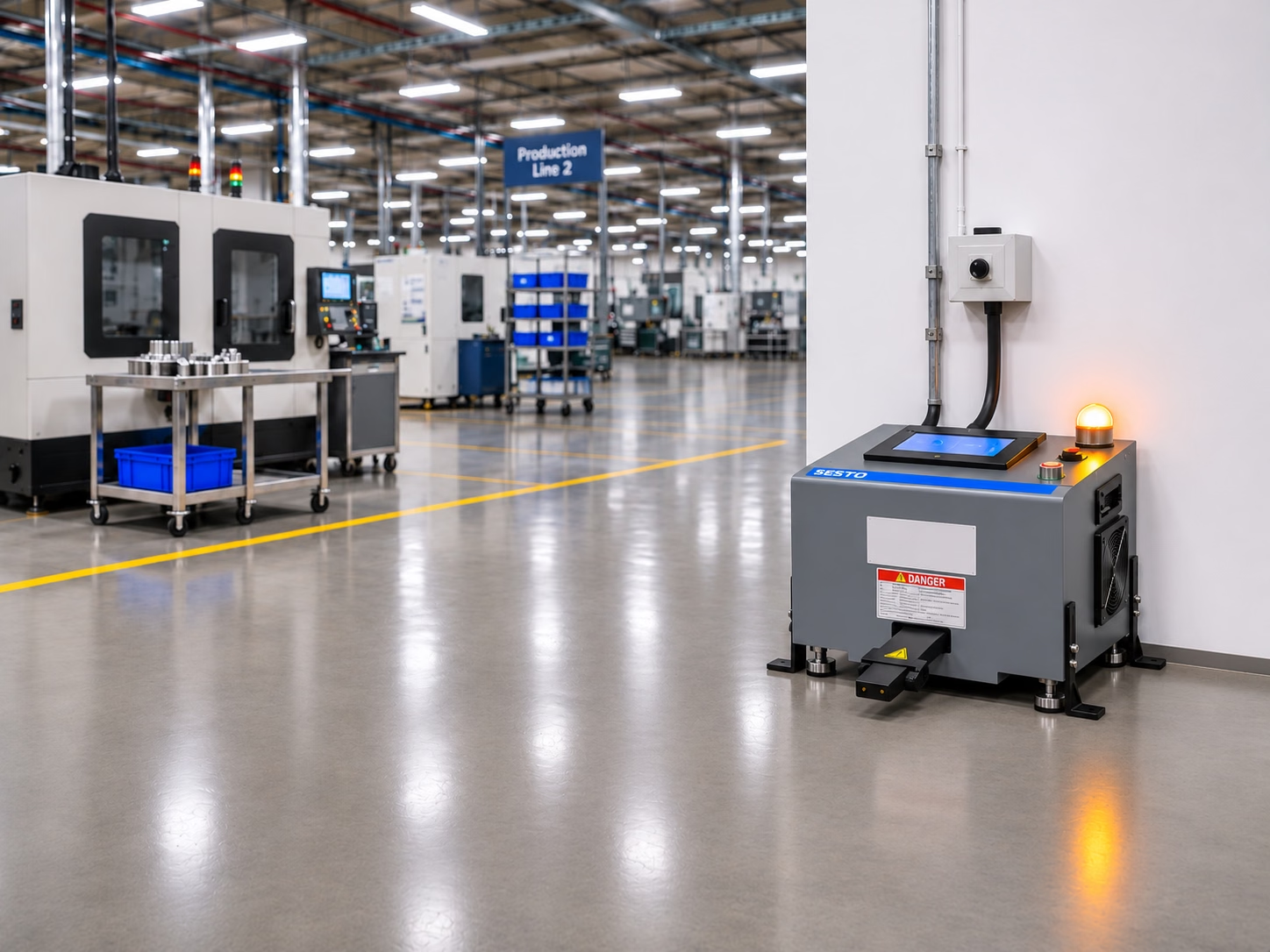
Autonomous Mobile Robots (AMRs) rely on charging systems to maintain reliable operations and support continuous material movement.
While both contact and contactless charging can automate the recharging process, they differ in how power is transferred, their infrastructure requirements, and long-term maintenance considerations.
Understanding these differences helps businesses select a charging solution that fits their operational needs.
1. How Does Contact Charging Work?
Contact charging transfers electrical power through physical connections between the AMR and its charging station.
When the AMR docks, conductive components such as metal plates or charging pins establish an electrical connection.
This approach provides efficient power transfer and is widely used in industrial automation.
However, physical contacts require proper alignment and periodic maintenance to support reliable charging.
2. How Does Contactless Charging Work?
Contactless charging transfers electrical power without a direct physical connection.
Using electromagnetic induction, energy is transferred between compatible coils in the charging station and the AMR.
This eliminates the need for exposed charging contacts, reducing mechanical wear associated with repeated docking.
However, charging performance still depends on the distance and alignment between the charging components.
3. What Are the Maintenance Differences?
Both charging methods require maintenance, but their requirements differ.
Contact Charging
Contactless Charging
The appropriate solution depends on the operating environment and maintenance requirements.
4. How Do Charging Efficiency and Infrastructure Compare?
Contact charging generally offers higher energy-transfer efficiency through direct electrical connections.
Contactless charging eliminates physical connections but may experience additional energy losses during power transfer.
Infrastructure requirements also vary.
Contact charging requires compatible docking interfaces, while contactless charging relies on transmitter and receiver systems.
Both methods require suitable power infrastructure, adequate docking clearance, and proper integration with the AMR.
5. Which Charging Method Fits Your Operations?
The choice between contact and contactless charging depends on how AMRs are deployed.
Contact charging may suit operations prioritizing energy efficiency, cost-effectiveness, and established charging infrastructure.
Contactless charging may benefit operations seeking reduced charging-contact maintenance, particularly in environments where frequent charging or contamination is a concern.
Operating hours, fleet size, and workload demands should also be considered.
For example, facilities operating across multiple shifts may benefit from opportunity charging, where AMRs recharge during scheduled breaks or available idle periods.
Both contact and contactless systems can support this approach when properly configured.
Charging Should Support Your Workflow
Choosing an AMR charging system goes beyond how electricity is transferred.
Charging efficiency, maintenance requirements, infrastructure, and operational schedules all influence how effectively AMRs support material movement.
At SESTO Robotics, we help businesses plan AMR deployments around their operational requirements, from charging infrastructure and navigation routes to fleet management and system integration.
Planning to introduce AMRs into your facility?
Connect with SESTO Robotics to explore an AMR solution that fits your workflow.
sales@sestorobotics.com
